
Modern Foreign Languages
Intent
At Cosby Primary School, we aim to provide a high-quality French curriculum that inspires curiosity and equips pupils with the skills to communicate confidently in another language. We recognise that language learning plays a key role in developing oracy, grammatical understanding and cultural awareness, supporting pupils to become articulate and globally aware individuals.
To ensure consistency and high-quality delivery across the school, particularly for non-specialist teachers, we use the Language Angels scheme. This provides a clearly sequenced and progressive curriculum built around the three core pillars of language learning: phonics, vocabulary and grammar. These elements are carefully interwoven to enable pupils to decode, understand and manipulate language effectively.
Our curriculum is designed to move pupils progressively from word-level understanding to sentence construction and extended communication. Through regular revisiting and purposeful repetition, pupils embed key knowledge into long-term memory, allowing them to recall and apply language with increasing independence and accuracy.
We aim for all pupils to develop confidence in speaking and listening, alongside reading and writing, fostering a love of languages and preparing them for further language learning in Key Stage 3 and beyond.
Implementation
The French curriculum is delivered through the Language Angels scheme, which ensures a coherent, progressive and fully resourced approach to language teaching across Key Stage 2. A two-year rolling programme is in place to ensure coverage and progression in mixed-age classes.
The curriculum is built around the three core pillars of language learning: phonics, vocabulary and grammar. These are interwoven within all lessons and units to enable pupils to develop both substantive knowledge (what words mean and how language is structured) and disciplinary knowledge (how to use language to communicate).
Phonics is taught explicitly through a series of progressive lessons and is revisited regularly to support accurate pronunciation, decoding and spelling. Vocabulary is carefully selected and introduced in small steps, with core vocabulary revisited across units to support retention. Grammar is introduced implicitly in the early stages of language learning before becoming increasingly explicit, allowing pupils to understand and manipulate language independently.
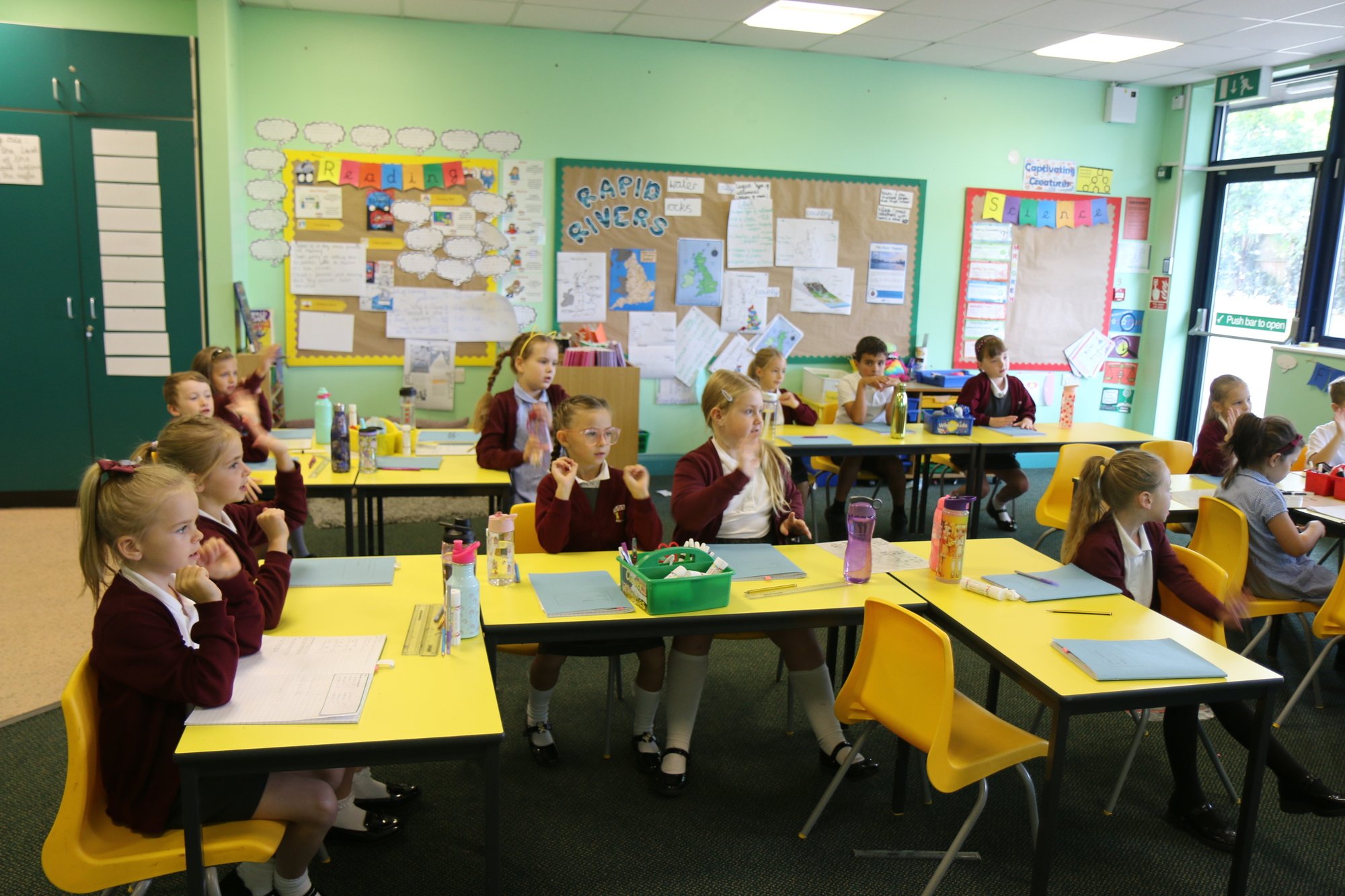
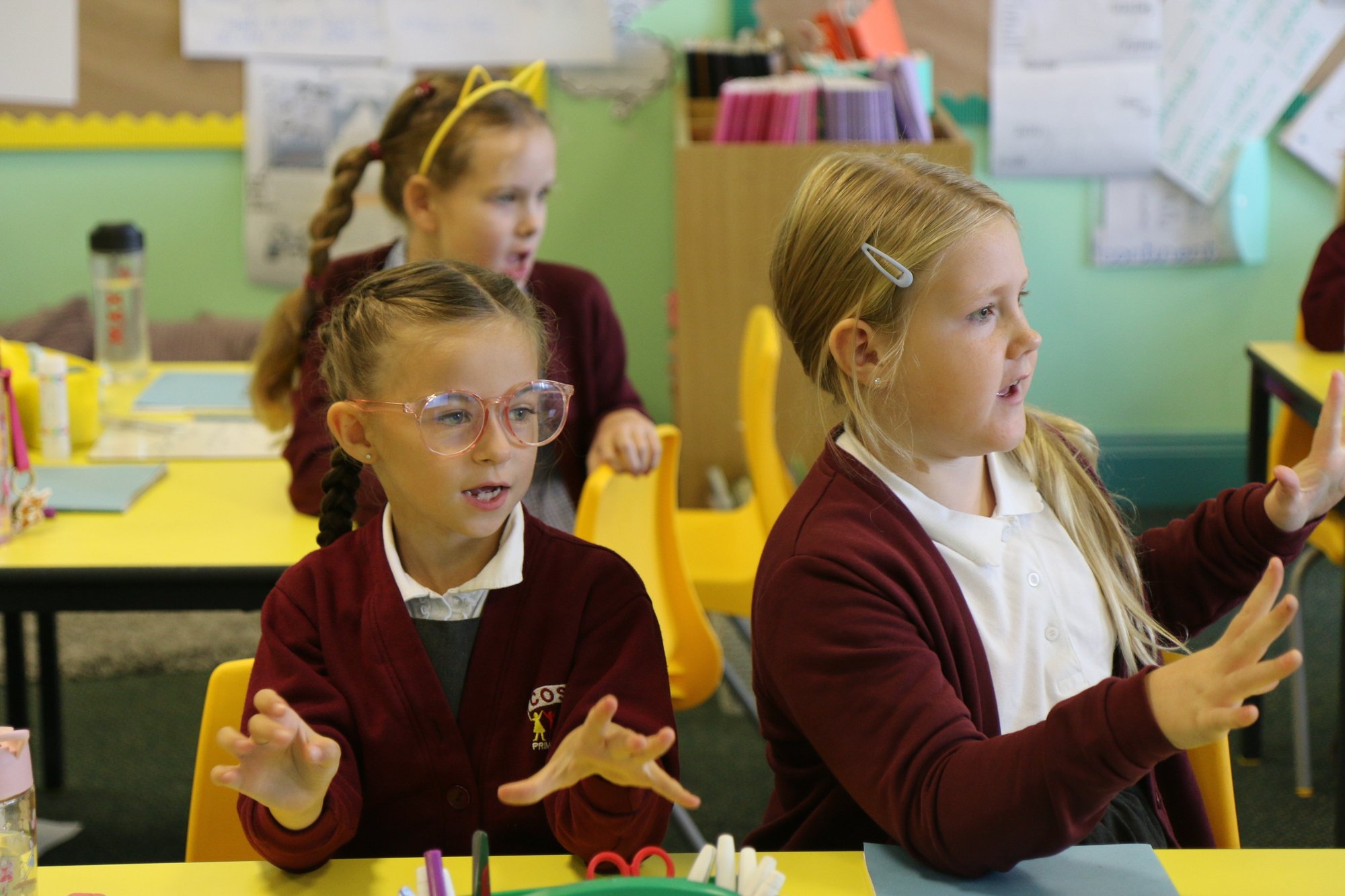
Lessons are sequenced to build knowledge cumulatively, moving pupils from word-level responses to phrases and then extended sentences. Each unit has a clear end goal, and pupils are given opportunities to practise and apply language across the four key skills: speaking, listening, reading and writing. Oracy is prioritised, with structured opportunities for repetition, rehearsal, questioning and role-play embedded within lessons.
To support long-term memory, previously taught language is systematically revisited and recycled. Lessons begin with retrieval of prior knowledge, and pupils are supported through the use of vocabulary mats, knowledge organisers and scaffolds to reduce cognitive load and enable independent application.
Assessment is used to support learning and inform teaching. End-of-unit assessments provide opportunities to assess all four language skills and are used to identify strengths and next steps. Teachers use this information to adapt teaching, ensuring that all pupils are supported and challenged appropriately.
Impact
The impact of our French curriculum is evidenced through pupils’ ability to recall, reuse and apply language with increasing accuracy and independence over time. Pupils make clear progress from word-level responses to constructing sentences and short paragraphs, both orally and in writing.
Pupils demonstrate secure knowledge of the three key pillars of language learning: phonics, vocabulary and grammar. They are able to pronounce words with increasing accuracy, decode unfamiliar language using phonics knowledge and apply grammatical structures to create their own responses.
Through regular retrieval and revisiting of prior learning, pupils develop strong long-term memory of key language. They are able to draw upon previously taught vocabulary and structures when speaking, reading and writing, showing increasing fluency and confidence.
Assessment is used systematically to monitor progress across the four key skills: speaking, listening, reading and writing. Outcomes from end-of-unit assessments, alongside pupil voice and work scrutiny, show that pupils can understand spoken and written language, respond to questions, engage in simple conversations and produce written responses using familiar language.
Pupils demonstrate a developing awareness of linguistic structures and make links between languages, supporting their wider understanding of grammar and communication. They also develop cultural awareness and respect for diversity.
By the end of Key Stage 2, pupils have the foundational knowledge and skills required for successful progression to Key Stage 3 language learning.